

Sindh Private Schools Protest
The recent Sindh private schools protest brought attention to growing tensions between private educational institutions and government departments. School administrations across Karachi and other parts of Sindh had announced a complete shutdown to record their concerns over what they perceived as excessive interference in school affairs. The planned strike created serious concern among parents, students, and teachers, as it threatened to disrupt academic activities across the province.
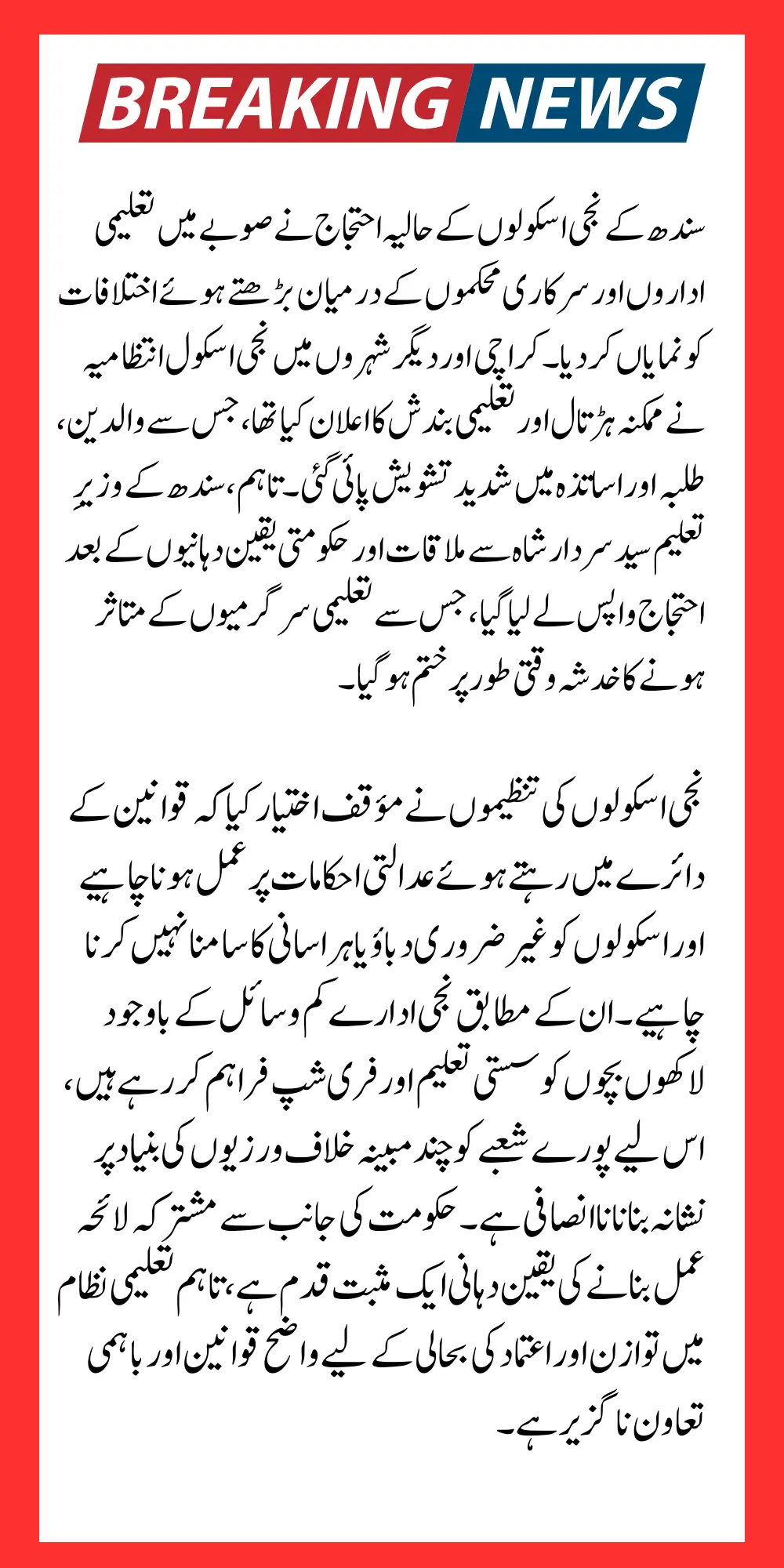
However, the situation took a different turn after a high-level meeting between representatives of private school associations and Sindh Education Minister Syed Sardar Shah. Following assurances from the provincial government, the protest and strike were withdrawn, easing fears of an education halt. This development highlighted the importance of dialogue in resolving conflicts within the education sector.
You Can Also Read: BISP 8171 Re-validation 13500 Payment January 2026 How to Rejoin Current Qist
| Aspect | Key Details |
|---|---|
| Protest Status | Strike and shutdown withdrawn after talks |
| Main Concern | Alleged harassment by Anti-Corruption Department |
| Government Response | Assurance of lawful and respectful implementation |
| Legal Issue | Dispute over freeship verification process |
| Impact | Stress on students, parents, and teachers |
Major Demands of Private School Associations
- Dignified and lawful implementation of Sindh High Court orders
- End to direct inspections by the Anti-Corruption Department in schools
- Respect for the Sindh Private Institutions Act, 2013
- Protection of students, teachers, and parents from harassment
- Clear regulatory role for the Directorate of Private Institutions
You Can Also Read: BISP Qist Centers Agent Procedure 2026 Via OTP Wallet Free SIMs
Government Response and Official Assurances
During the meeting, the Sindh education leadership acknowledged the concerns raised by private school administrations. The education minister emphasized that all government departments, including the Anti-Corruption Department, must operate within legal boundaries and follow court directives responsibly. At the same time, he stressed that schools should not be subjected to unnecessary pressure or disruption.
The minister also confirmed coordination with the Sindh chief minister to ensure a balanced approach. A joint mechanism between the Education Department and the Anti-Corruption Department was proposed to ensure that court orders are implemented correctly without harming the learning environment or causing distress to students and staff.
Impact on Students, Parents, and the Education Sector
The announcement of a province-wide strike initially caused anxiety among parents and students, especially during an already challenging academic year. The withdrawal of the protest helped prevent disruption, but the underlying issues remain significant for the future of private education in Sindh.
- Fear and psychological stress among students and female teachers
- Confusion among parents due to repeated questioning
- Risk of academic loss due to potential closures
- Uncertainty about regulatory authority and oversight
You Can Also Read: USD Pkr Rate January 2026 Check All Details
Key Issues Raised by Private Schools
Private school associations argued that recent actions by anti-corruption teams went beyond their legal mandate. According to school representatives, these actions affected not only administrations but also teachers, students, and parents, creating an atmosphere of fear within educational institutions.
They maintained that private schools play a crucial role in Sindh’s education system by offering affordable education and freeships to underprivileged students. From their perspective, treating the entire sector harshly due to alleged individual violations was unjust and damaging to the reputation of long-established institutions.
Legal and Regulatory Concerns
A major point of contention was the interpretation of a Sindh High Court verdict related to freeship verification. Private school bodies argued that verification should be handled through designated education authorities rather than on-site inspections. They believe this approach aligns better with existing laws governing private institutions in Sindh.
Additionally, school associations indicated that they would seek legal clarification through fresh court petitions. This shows that the issue is not only administrative but also deeply rooted in legal interpretation and regulatory balance.
Conclusion
The Sindh private schools protest served as a reminder of the fragile balance between regulation and autonomy in the education sector. While the immediate crisis was resolved through dialogue, long-term solutions will depend on clear laws, respectful enforcement, and cooperation between institutions and the government. Ensuring a safe, stable, and supportive environment for students must remain the top priority for all stakeholders.
You Can Also Read: Intermediate Fa Fsc Exams 2026 Begins Check Exams Dates